
0
Library of Congress, APH and NLS

The relationship between these entities is a structured federal partnership that has existed since the early 1930s. It helps to look at it as a chain of command:
1. The Library of Congress (The Parent)
The Library of Congress is the ultimate “home” for the program. It provides the legal authority under the Pratt-Smoot Act of 1931, which mandates that the government provide reading materials for those who cannot use standard print. It also manages the Chafee Amendment, a copyright exception that allows these books to be recorded without paying traditional commercial royalties, provided they are restricted to eligible patrons.
2. The National Library Service (NLS) (The Administrator)
The NLS is a specific division within the Library of Congress. Think of them as the Project Managers.
- Selection: They decide which books get recorded (e.g., “We need a new version of Unfinished Tales“).
- Funding: They receive the federal budget and pay for the production of the books and the Talking Book Machines.
- Distribution: They manage the cloud-based BARD (Braille and Audio Reading Download) system and a nationwide network of regional libraries that mail out the cartridges.
3. The American Printing House for the Blind (APH) (The Factory & Studio)
The APH is a private, non-profit organization (based in Louisville, KY) that acts as one of the primary contractors for the NLS.
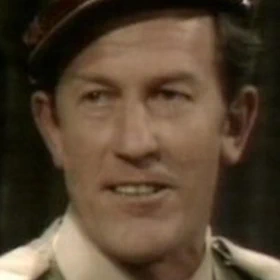
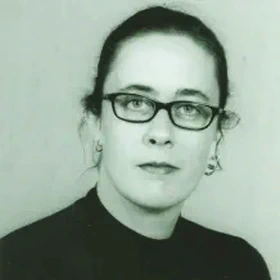
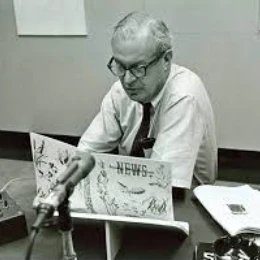
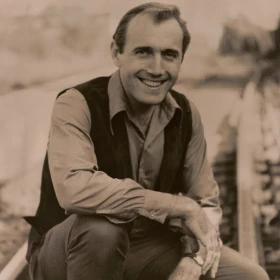
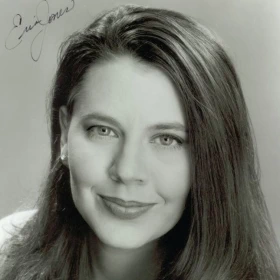
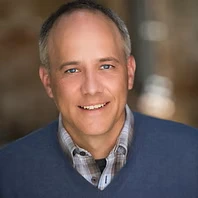
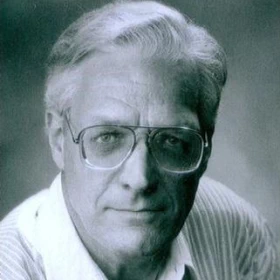
- The Studio: While the NLS manages the program, the actual recording happens at the APH. They select narrators like Erin Jones, Roy Avers, and George Holmes – professional voice talents hired by the APH to work in their specialized studios.
- Technical Standards: The APH follows strict NLS specifications (like the 15/16 ips speed for cassettes or the DAISY standard for digital) to ensure the books are accessible and navigable for the blind.
Audio Book Releases
The Hobbit



The Lord of the Rings

The Silmarillion

Unfinished Tales
Beren and Lúthien

The Children of Húrin
The Fall of Gondolin

The Fall of Númenor
The History of Middle-earth

The Adventures of Tom Bombadil

NLS Book Numbers
The prefixes in NLS book numbers act as a format and source code. They tell you how the book was recorded and what technology it requires to listen to. While there are many other variant designations used by the NLS, this page will focus on the ones which are used for Tolkien recordings
1. The Digital Era (Current)
These are the books you find on BARD (Braille and Audio Reading Download) and on the modern digital cartridges.
- DB (Digital Book): The standard prefix for the NLS national collection. These are high-quality digital recordings, usually produced by the APH or other NLS contractors.
2. The Analog Era (Retired/Legacy)
You will still see these in the NLS Catalog, but they generally refer to physical media that is no longer being manufactured.
- RC (Recorded Cassette): The “workhorse” of the 1970s through 2000s. These were 4-track, 15/16 ips cassette tapes. Almost all of these have now been digitized and re-labeled as DB.
- TB (Talking Book): This is the oldest prefix, referring specifically to the original 33⅓ rpm (and later 16⅔ and 8⅓ rpm) records. If you find a Tolkien book with a TB prefix, you are looking at a 1940s or 50s recording.
| Prefix | Format | Medium | Status |
| DB | Digital | BARD / Cartridge | Current Standard |
| RC | Analog | 4-Track Cassette | Legacy (Most Digitized) |
| FD / RD | Analog | Vinyl Record | Retired |
| TB | Analog | Record (Oldest) | Retired |
| BR | Braille | Physical Paper | Current Standard |
Physical Media Formats
The TB (Talking Book) Vinyl Format
The TB (Talking Book) prefix represents the Golden Age of the NLS program, covering the era of heavy vinyl and flexible records that preceded the cassette tape. These were not your standard commercial LPs; they were specialized, government-issued vinyl designed to squeeze as much speech as possible onto a single disc.
1. The Three Speeds of TB Records
While commercial music records moved from 78 rpm to 33⅓ rpm (LPs) and 45 rpm (singles), the NLS pushed the technology even further to prioritize duration over musical fidelity.
| Speed | Era | Features |
| 33⅓ rpm | 1934–1958 | The original format. These were 12-inch, heavy vinylite records. A single book could require 10 to 15 double-sided discs. |
| 16⅔ rpm | 1958–1973 | Half the speed of a standard LP. This allowed roughly 45 minutes per side on a 10-inch record, drastically reducing the weight of the “book.” |
| 8⅓ rpm | 1973–2001 | The slowest speed ever used for mass production. This was primarily used for “Flexible Discs” (magazines and thin books) and provided nearly 90 minutes per side. |
2. Physical Characteristics
- Rigid Vinyl: Early TB records were much thicker and more durable than commercial records because they had to survive being mailed back and forth across the country in heavy fiberboard containers.
- The Flexible Disc: Starting in the late 60s, the NLS introduced thin, paper-like vinyl sheets. These were often used for Talking Book Topics or short novels and could be played on the same specialized players.
- Center Hole: Unlike the large 1.5-inch hole of a 45 rpm single, TB records used the standard small spindle hole found on LPs, but they required a specialized Talking Book Reproducer to handle the slower 16⅔ and 8⅓ speeds.
3. The “TB” to “RC” Transition
Looking at early Tolkien productions, you might notice that a book like The Fellowship of the Ring was originally issued as a multi-record set. A patron would have to flip and change discs 10 or 20 times to finish a book. This is why the NLS was so enthusiastic in moving to RC (Recorded Cassette) in the 70s – a single cassette could hold 6 hours of audio, replacing several heavy records.
4. Why You Can’t Play Them on a Normal Turntable
If you were to find a vintage TB record today and put it on a standard modern turntable, you would encounter two serious problems:
- Speed: Most modern players only have 33 and 45 rpm settings. Playing a 16⅔ rpm TB record at 33 rpm would make Norman Barrs sound like a chipmunk on fast-forward.
- Groove: TB records used a “microgroove” or specialized groove depth to maximize time. Standard needles can sometimes skip or damage the tracking on the ultra-slow 8⅓ rpm discs.
The RC (Recorded Cassette) Format
If the TB records were the “Heavy Vinyl” era of the NLS, the RC (Recorded Cassette) prefix represents the “Portability” era. For nearly 40 years, this was the primary way Tolkien’s works were consumed by the blind community in the USA.
To understand the RC format, you have to realise that while it looks like a normal music tape, it was technologically modified to hold four times the amount of audio.
1. The “15/16 ips” Speed (Half-Speed)
A standard music cassette plays at 1⅞ ips (inches per second). The NLS, however, recorded their books at exactly half that speed: 15/16 ips.
- The Result: A standard 90-minute cassette (C-90) could now hold 3 hours of audio per side.
- The Benefit: By slowing the tape down, they could fit twice as much audio on a single side.
- The Trade-off: High-frequency response (music quality) was sacrificed. However, for a narrator’s voice, the 15/16 ips speed was more than sufficient for clear, intelligible speech.
2. The 4-Track System
This is the most ingenious part of the RC format. On a commercial music cassette, there are four tracks: two for Side A (Left/Right stereo) and two for Side B. The NLS used all four tracks for mono speech, playing only one track at a time.
- Efficiency: A book like The Fellowship of the Ring, which might be 20 hours long, could fit onto just 4 cassettes instead of 20.
- How it worked: You would listen to Side 1, then flip the tape to Side 2. Then, you would flip a switch on your NLS player to Track 3 and listen to Side 1 again, then flip to Track 4 on Side 2.
- Total Capacity: This 4-track, half-speed combo meant a single C-90 cassette could hold 6 hours of audio.
3. The Specialized RC Player
Because these tapes were recorded at half-speed and used non-standard track alignments, you could not play them on a standard Walkman or home stereo.
- The Sound of “Normal” Playback: If you put an RC Tolkien tape into a normal cassette player, the narrator would sound like a high-pitched chipmunk (because the player is moving twice as fast as the recording). Additionally, you would hear two tracks playing at once – one forward and one backward.
- The NLS Machine: These were rugged, yellow or gray boxes provided for free by the government. They featured a “Side” switch (1-2 and 3-4) and a variable speed control, which allowed patrons to speed up the narrator’s voice without changing the pitch – a precursor to modern 1.5x speed listening.
4. Identification and “Beep” Cues
To help blind users navigate, RC tapes included “Indexing Beeps.”
- If you fast-forwarded the tape, you would hear a series of high-pitched beeps. These were placed at the beginning of chapters.
- The Announcement: At the end of every side, the narrator would say: “End of Side 1, Track 1. To continue, turn the cassette over and play Side 2, Track 2.” —
Summary: RC vs. Commercial Cassette
| Feature | Commercial Cassette | NLS RC Cassette |
| Speed | 1⅞ ips | 15/16 ips (Half-speed) |
| Tracks | 2 Stereo (Side A/B) | 4 Mono (Sequential) |
| Capacity (C-90) | 90 Minutes | 360 Minutes (6 Hours) |
| Playback | Any standard player | Specialized NLS Machine only |
The DB (Digital Book) Format
The DB (Digital Book) prefix marks the modern era of the NLS, having replaced the analog RC (cassette) and TB (vinyl) formats from around 2008. While you might download them as a single zip file from BARD, they are Digital Talking Books (DTBs) based on the international DAISY (Digital Accessible Information System) standard.
BARD stands for Braille and Audio Reading Download. It is a secure, web-based service and mobile application provided by the Library of Congress. It essentially moved the Talking Book program from the era of mailing heavy boxes of tapes into the era of instant streaming and downloading.
1. Better Navigation
The main advantage of the DB format, especially for scholarly works like The History of Middle-earth, is the Navigation Levels. Using the Menu buttons on an NLS Advanced Player (DA1), a user can toggle their navigation depth:
- Level 1: Jumps between major books or parts.
- Level 2: Jumps between specific chapters.
- Level 3: Jumps between footnotes or specific editorial notes.
- Page Jump: Most DB books allow the user to go to a specific Print Page number, allowing a blind student to follow along with a sighted peer using the HarperCollins hardbacks.
2. The Hardware: Cartridges and USB
While the files are digital, they are often distributed on physical NLS Cartridges.
- The Design: About the size of a cassette tape but with a large finger hole and a beveled edge so it can only be inserted one way.
- The Connection: Inside the hole is a standard USB type-A plug. If you plug an NLS cartridge into a computer, it acts just like a flash drive.
- Durability: Unlike tapes that tangle or records that scratch, these cartridges are solid-state and extremely sturdy.
3. Encryption and Protection (PDTB)
Because the NLS operates under a specific copyright exception (the Chafee Amendment), DB files are encrypted using Protected DAISY (PDTB).
- Digital Lock: You cannot play a DB file on normal domestic music devices, computers etc.
- The Key: Only “authorized” players (like the NLS digital machine or the BARD Mobile app) have the internal decryption key required to correctly play the files.
This excellent video provides a visual walkthrough of the transition from the heavy 33 1/3 rpm records to the flexible discs, cassettes and eventually digital formats.