
0

1992 Leaf by Niggle (BBC Radio Drama)
Release Date: 1992.09.20
Readers: Full Cast
Language: English
Script: Brian Sibley
Organisation: BBC Radio 5
Series: Tales from the Perilous Realm (BBC)
Duration: ~30 minutes
Unabridged: n/a
Country: UK
Licenced: Yes
Formats: Radio, CD, Digital
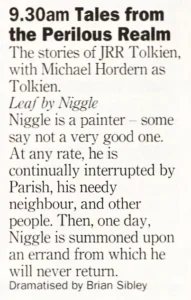
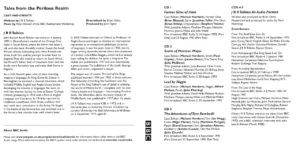
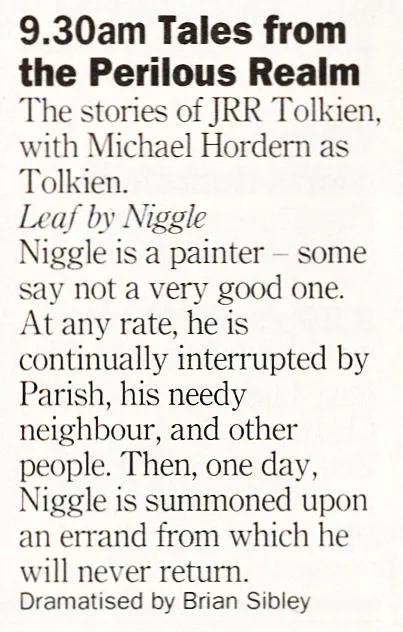
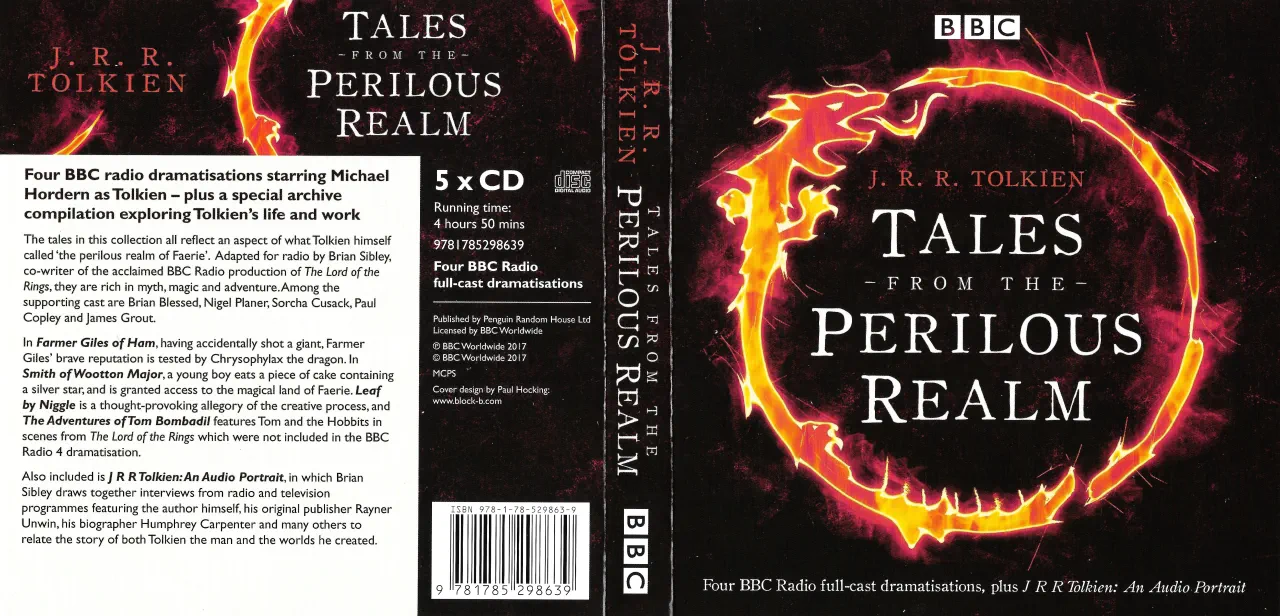
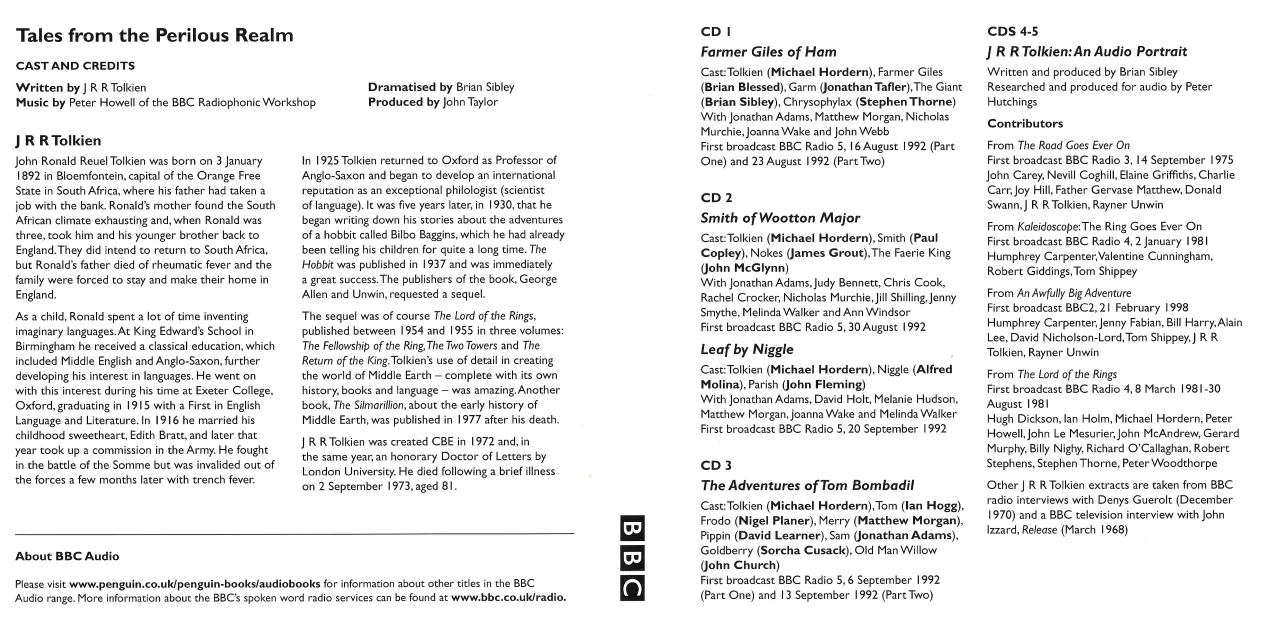
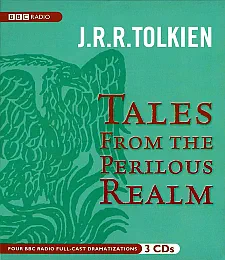
The 1992 BBC Radio 5 production of Leaf by Niggle was part of the Tales from the Perilous Realm (BBC) series by Brian Sibley. The story is a delicate allegory for life, death, and the creative process – particularly Tolkien’s own creative process, he had described himself as a ‘niggler’ a few times. Sibley shifted the tone away from the rambunctious comedy of Farmer Giles of Ham, for example, toward something much more intimate and ethereal.
In his adaptation, Brian Sibley emphasized the autobiographical nature of the story.
- The “Journey” Metaphor: Sibley directed Michael Hordern to read the narrative transitions with a sense of profound sadness, leaning into the idea that “The Journey” was Tolkien’s own way of talking about his fear of dying before finishing The Lord of the Rings.
- The Tree Sound Design: The “Tree” in the afterlife wasn’t just a background detail; the sound designers created a specific “rhythm” of rustling leaves that matched the meter of Niggle’s heartbeat as it slowed down and eventually found peace.
Stephen Oliver composed a specific theme for Niggle that was played on a single, somewhat “lonely” woodwind instrument (likely an oboe or clarinet). As the story progressed and Niggle found his place in the mountains, the music gradually expanded into a fuller, more harmonious orchestral arrangement, signifying his completion and healing.
| Role | Actor | Notes |
| Niggle | Alfred Molina | Molina played Niggle with a wonderful sense of flustered anxiety. He captured the character’s struggle between his “kind heart” and his obsessive need to finish his painting. |
| Parish | John Fleming | Niggle’s neighbour with the perfect amount of mundane, practical nagging, providing the grounded contrast to Niggle’s artistic dreaming. |
| The First Voice | Jonathan Adams | Represented Justice/The Law during Niggle’s “examination” in the dark. |
| The Second Voice | Joanna Wake | Represented Mercy, the more gentle voice during the hospital/purgatory sequence. |
To handle the transition from the “Real World” to the “Afterlife” (the Workhouse and the Country), the production used several sophisticated audio layers:
- The “Rain” Motif: The sound of rain is a constant, oppressive element in the first half. They used a “close-miking” technique for the rain against Niggle’s window, which created a claustrophobic, damp atmosphere that symbolized Niggle’s mounting dread about his “Journey.”
- The Voices in the Dark: For the scene where Niggle is being judged by the two Voices while in the hospital, the actors recorded their lines with zero reverb (a “dead” acoustic), making it feel as if the voices were inside Niggle’s head.
- The “Transcendental” Shift: When Niggle finally reaches “The Tree”—the one he had always tried to paint – the soundscape completely transforms. The engineers introduced a wide-stereo wash of birdsong and wind in the leaves, using a high-frequency “sparkle” to make the audio feel bright and infinite, contrasting with the muffled, narrow sound of Niggle’s dusty workshop.