
0

1992 Farmer Giles of Ham (BBC Radio Drama)
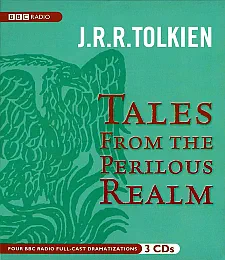
Release Date: 1992.08.16/23
Readers: Full Cast
Language: English
Script: Brian Sibley
Organisation: BBC Radio 5
Series: Tales from the Perilous Realm (BBC)
Duration: ~1 hour
Unabridged: n/a
Country: UK
Licenced: Yes
Formats: Radio, CD, Digital
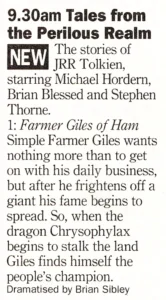
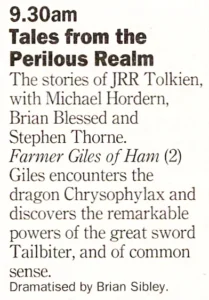
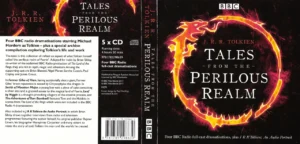
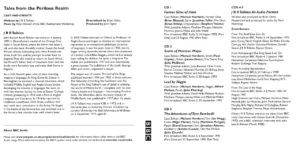
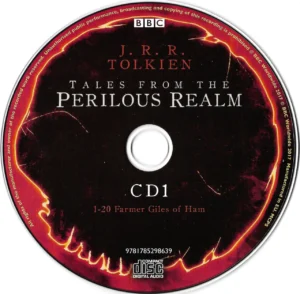
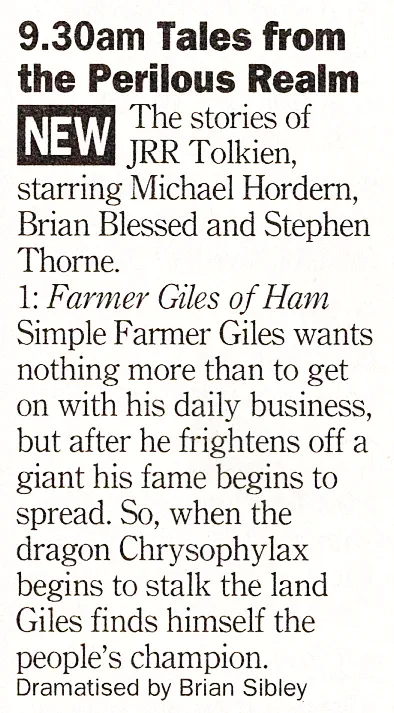
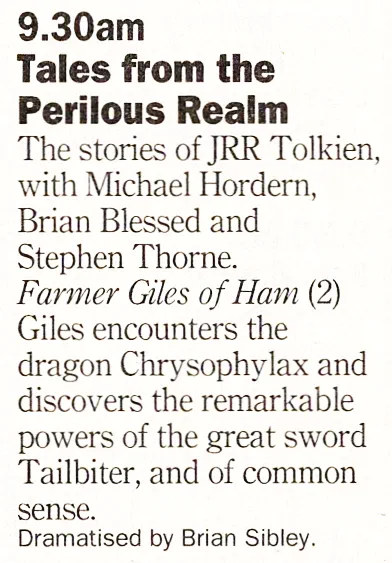
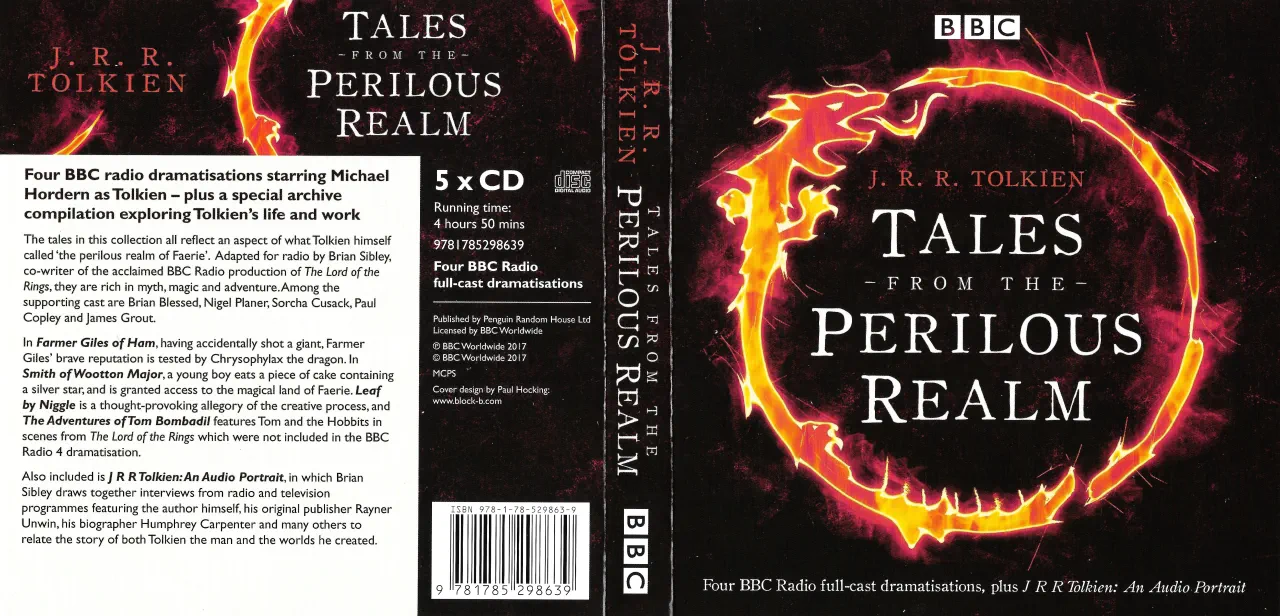
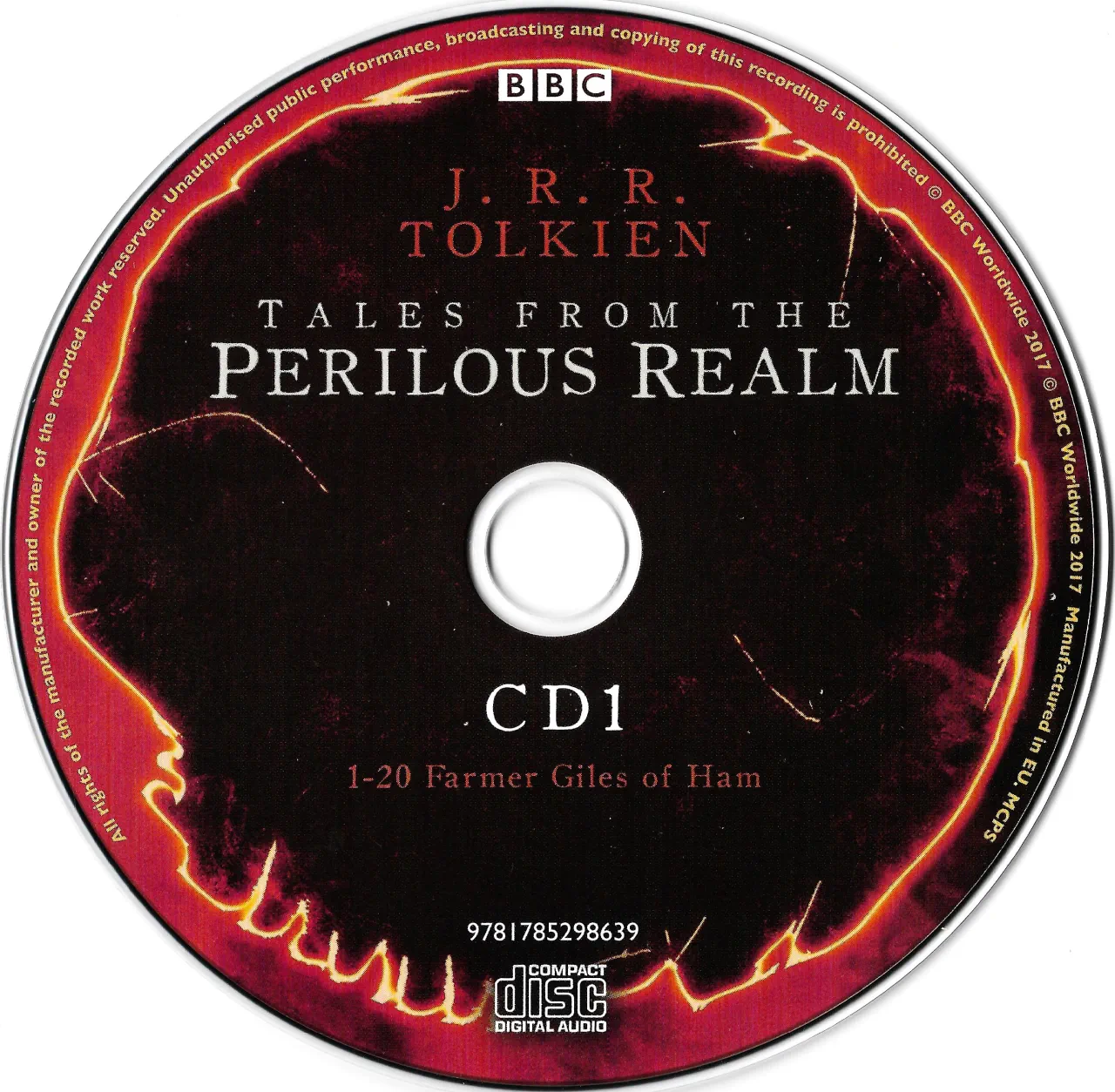
The 1992 BBC Radio 5 production of Farmer Giles of Ham was part of the Tales from the Perilous Realm (BBC) series by Brian Sibley. It brought a booming, comedic energy to Tolkien’s mock-heroic tale.
Brian Sibley took several creative liberties to make the story “pop” on radio:
- Expanding the Dog: In the book, Garm is mostly a nuisance. In the radio play, he is a fully realized character with a “talking” role, serving as the listener’s window into Giles’s domestic life, tho still something of a nuisance.
- The “Battle” Scenes: The confrontation at the bridge was directed with high-energy sound effects (the rattling of the blunderbuss, the dragon’s roar) to create a sense of scale that the prose version handles with dry irony.
- The Mock-Latin: Sibley retained Tolkien’s jokes about the origins of place names (like Ham and Thame) but had Michael Hordern deliver them with a “professorial wink” to the audience.
The music, composed by Stephen Oliver, was lighter and more “pastoral-comic” than his dark, sweeping score for The Lord of the Rings. It used woodwinds and bouncy rhythms to evoke the “Little Kingdom” setting, contrasting sharply with the more ethereal music used in the Smith of Wootton Major episode that followed.
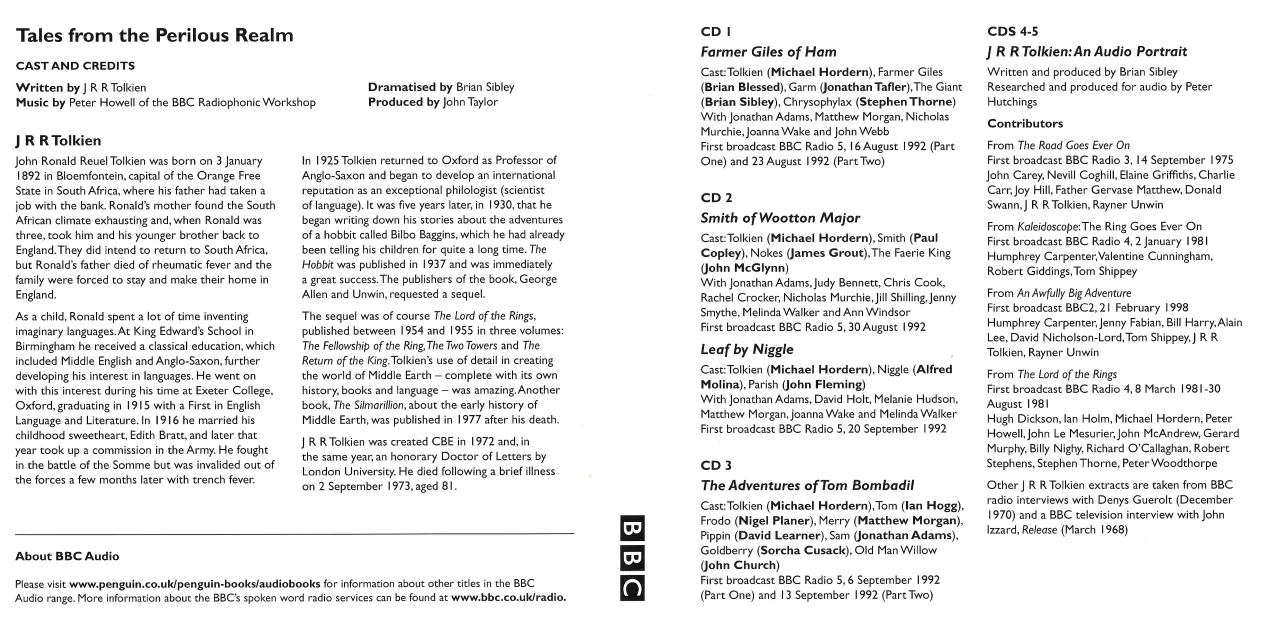
| Role | Actor | Notes |
| Farmer Giles | Brian Blessed | Blessed used his famous, booming voice to capture Giles’s transition from a grumbling farmer to a reluctant, “shouting” hero. |
| Chrysophylax Dives | Stephen Thorne | Played the dragon with a sophisticated, oily, and highly manipulative tone – the perfect foil to Giles’s bluntness. He had previously played Treebeard in the 1981 series. |
| Garm (The Dog) | Jonathan Tafler | Sibley expanded the role of the dog, turning him into a persistent “sidekick” who often causes more trouble for Giles than he solves. |
| The Giant | Brian Sibley | The adapter himself provided the voice for the deaf and short-sighted giant who blunders into Giles’s fields. He has joked that he was the only actor “cheap enough” to play a character who only had to shout and sound confused. |
| The King | James Grout | Played the King of the Middle Kingdom with a suitably pompous and greedy flair. He had previously played Barliman Butterbur in the 1981 series. |
The Dragon’s “Double Voice”. Stephen Thorne was a veteran of BBC Radio (and famously played Aslan in the 1980s Narnia TV series), known for his rich, resonant bass. To make him sound like a dragon, the BBC used two primary techniques:
- Close-Mic “Whisper” Technique: To make the dragon sound manipulative and sophisticated (rather than just a roaring monster), Thorne recorded his lines extremely close to the microphone. This captured the “wet” sounds of his mouth and breath, making the dragon feel like he was whispering directly into the listener’s ear.
- Pitch Shifting & Harmonization: The BBC sound engineers applied a subtle “pitch-shifter” or “harmonizer.” They took Thorne’s natural voice and layered it with a version of itself that was shifted down by a few semi-tones. This created a “thick,” unnatural resonance that sounded like the voice was coming from a massive chest cavity.
Acoustic Scaling (The Giant). For the giant (played by Brian Sibley himself), the production didn’t just use volume; they used spatial acoustics.
- The “Dead” Room vs. The “Live” Room: To simulate the distance of the giant, the Sibley would record his lines in a large, “echoey” part of the studio (the “Live” area) while Brian Blessed (Giles) recorded in a “Dead” (muffled) booth.
- Off-Axis Recording: To capture the giant’s “short-sightedness” and confusion, Sibley would speak away from the microphone or move past it while shouting, creating a “Doppler effect” that made it sound like a massive being was blundering through a field.
The Blunderbuss & Sound Design. The “heroic” sound of the blunderbuss – which Giles uses to shoot the giant – wasn’t just a gun sound.
- The Layered Bang: The BBC Sound Effects library (the “RED” series) was used to layer multiple sounds: a real black-powder musket shot, the sound of breaking glass (to simulate the “scattering” of the scrap metal Giles loaded), and a low-frequency “thud” to give the weapon a comical weight.
The “Garm” Effect. For Garm the dog, Jonathan Tafler didn’t just bark; he performed “human-dog” speech.
- The “Puppy” EQ: The engineers used Equalization (EQ) to boost the high frequencies and “thin out” the low end of Tafler’s voice. This gave the dog a yappy, nervous quality that made him sound physically smaller than Brian Blessed’s booming Farmer Giles.
“Booming Blessed.” Because Brian Blessed is naturally so loud, the sound engineers famously had to turn his microphone gain almost all the way down. In radio circles, it’s joked that they didn’t need a “shouting” effect for Blessed – they needed an “anti-shouting” effect to prevent him from blowing out the listeners’ speakers!